

My daughter’s toy box is about the size of a compact car, so big you might think there’s something wrong with the girl if she only had playtime with a cardboard box, a wooden spoon, and a roll of tape from the junk drawer.
The truth is, this is not a post written by one of those “kids don’t need things” people, I promise… But it is a post about how I spent real money on toys that my daughter played with for only three days, but at the same time, the toys she still want to play with after two years are the ones I can tell the difference between now.
Here’s the thing which I learned the hard way after buying toys online: if you’re going through the toy section (or the website equivalent) and feeling a bit lost, this is the place for you.
The “Wow Factor” Trap
It’s not difficult at all to get the toy which looks really cool on the shelf or on the advertisement, the one with the lights and the sound effects, the various modes, and the box that occupies half the shopping trolley. Actually, kids react to these with a real burst of excitement at most for a week.
Novelty, of course, is not necessarily a bad thing. But it requires a lot of tolerance that the noisy kids are not likely to be the ones kept around the longest. They are the ones that let the imagination do the filling of the gaps.
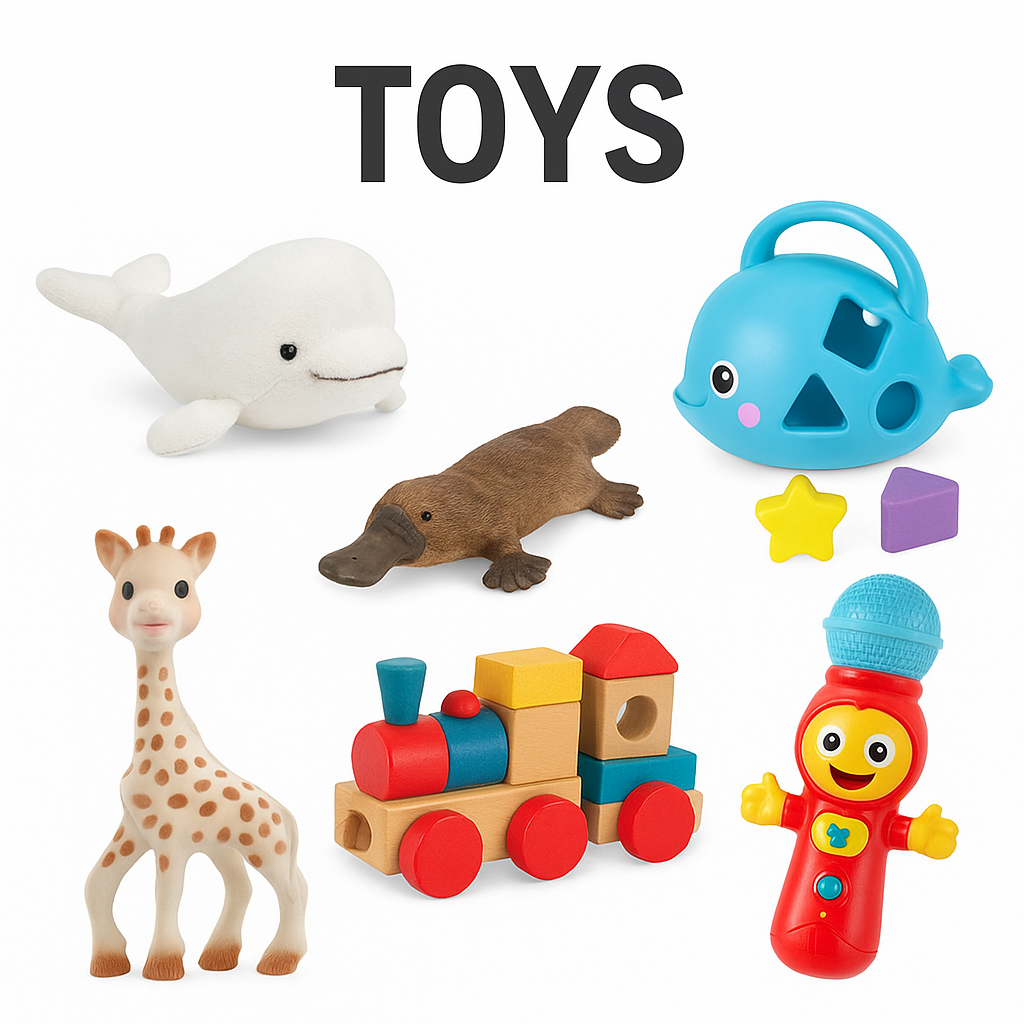
Building blocks. Paints and crayons. Figurines or animals of a good quality. Baby dolls that do not play music when turned on. Puzzles that make you think. These are the toys children ask for when it rains, on holidays, when the cousins arrive, after the television screen time limit has been reached when another alternative is needed.
The flashier toys tend to do all the playing for the child. The best toys hand the play back to them.
Age-Appropriateness: More Than a Safety Label
The age recommendations on toy packaging aren’t just liability language. They’re actually useful signals — not because younger kids “can’t handle” more complex toys, but because a toy that’s too advanced is frustrating, and a toy that’s too simple gets boring in an hour.
I’ve seen this play out so many times. A well-meaning gift that’s technically for “ages 6+” lands in the hands of a four-year-old and becomes a source of meltdowns rather than joy. Or the reverse — a toddler toy given to a seven-year-old who immediately loses interest because there’s nothing to figure out.
When in doubt, think about what your child is into right now, not what you think they should be into. Are they building elaborate stories with their toys? Get something that supports that narrative play. Are they into figuring out how things work? Mechanical or construction toys are your friend. Do they love movement and physical challenge? Outdoor toys, balance boards, climbing sets.
Meet the kid where they are.
The Toys I’ve Actually Seen Last
Without turning this into a shopping list, here are the categories that have earned their place in our house over time:
Open-ended building toys. Duplo, magnetic tiles, wooden blocks — anything where there’s no single “right” way to use it. These grow with kids because the complexity of what they build grows with them. My daughter’s magnetic tile creations at age three were flat patterns. At six, she’s building multi-level structures with skylights. Same toy, completely different play.
Puzzles. Slow, satisfying and deep, puzzles are on of the few toys that can bring great moments to kids both playing solo and with others. Start with age-appropriate piece counts and gradually increase. The pride when a big puzzle clicks into place is palpable.
Role play and pretend play sets. Kids love kitchens, tool sets, doctor kits, market stalls, children learn primarily by copying, and pretend play is one of the richest forms of it. These play sets will keep kids occupied while you can do your own things in peace (unless you want to join, sometimes you will, you know).
A Word on Screens and Battery-Powered Everything
I’m not here to shame anyone’s parenting choices around screens. Screen time has its place, and so do electronic toys. But I will only say that these are, in my opinion, the ones that are charged and light up and play music through speakers tend to be the ones that get put away at the bottom of the toy box, while the wooden train set keeps circulating.
If you are purchasing an electronic toy, consider a model where the child is required to do something, rather than a toy where your child only sees something happening. Being interactive is superior to being passive. And check whether the battery compartment is accessible — because you will be changing those batteries at 7am on a school day, I guarantee it.
Gift Buying for Someone Else’s Kid? Here’s the Cheat Sheet.
Few things are more stressful than buying a gift for a child you don’t know well. Here’s the approach that’s never really failed me:
- Ask the parents. Genuinely. Most parents have a running list of things they’ve said yes to and haven’t gotten around to buying yet. Asking isn’t unimaginative — it’s kind.
- When you can’t ask: go consumable or classic. Art supplies get used up (no clutter guilt), and classic toys — Lego, Playmobil, wooden puzzles, quality stuffed animals — rarely go wrong.
- Don’t buy the biggest, most elaborate thing. A smaller, beautifully made toy beats a large, cheaply made one almost every time.
- Think about the parents too. A toy that requires forty-five minutes of assembly and makes a noise like a fire alarm at full volume is not a gift. It’s a test of friendship.
Quality Really Does Matter Here
I’ll say this plainly: cheap toys break quickly, and broken toys are upsetting for kids in a way that feels disproportionate until you remember that these objects matter to them. A toy that falls apart after two uses isn’t a saving — it’s a disappointment disguised as one.
Well-made toys — the kind built from quality materials, with proper paint or coatings, with parts that fit together correctly — last. They get handed down to siblings. They survive the move. They end up in a box in the garage that gets opened twenty years later and makes someone smile.
That’s the standard worth aiming for.
Where We Come In
At BrandsParadise, we’re selective about the toy brands we carry — looking for products that are well-constructed, age-appropriate, and actually fun rather than just well-packaged. We know parents are making real decisions with real budgets, and we’d rather help you find something that lasts than sell you something that doesn’t.
Whether you’re shopping for your own kids, someone else’s, or stocking up ahead of birthdays and holidays — we’ve got options worth actually considering.
Browse our Toys collection at brandsparadise.com.au— sorted by age, category, and occasion so you can find the right thing without the guesswork.